
The Evolution of Casino Regulations in the UK: A Historical Perspective
In NatCen’s Patterns of Play dataset for online gambling, men account for 74% (on a weighted basis) of online gamblers whose gender was recorded. Streaming of live horse races is a key product for betting shops and online operators, and will remain so. A consultancy study commissioned by the racing industry and shared with DCMS after the call for evidence sites not on gamstop concluded that in 2022 the levy represents around 6% of total income to horse racing.
Under the Gambling Act of 2005, all casinos operating in the United Kingdom are required to obtain a license from the Commission. Casino operators are advised to review the latest edition of the guidelines and ensure the integration of these changes into their risk assessments, rules, procedures, processes, and training. Licensing authorities are reminded that when considering such applications, they must be satisfied that, if granted, the premises in question meets the relevant mandatory and default conditions for the relevant premises licence. Such casinos may operate as card clubs without offering casino games. Most of these casinos fall below the size thresholds of the other two categories.
While we do not know the full circumstances of these cases, similar reports are not uncommon, and considering these cases alongside the practice of increased wagering limits for losing accounts creates the impression of an online betting market that exists to only serve and maximise profit from losing customers. Most who engaged on this issue alleged that the restriction of winning accounts amounted to misuse of data and behavioural tracking for commercial purposes within systems ostensibly designed to prevent fraud or identify harmful gambling. We note that peer-to-peer betting exchanges and pool betting remain available to restricted bettors, but respondents highlighted that exchange accounts can be charged a high commission on winnings, which was seen as particularly unfair given that operators do not assume liability for peer-to-peer bets. Many online operators now use data-driven consumer profiling tools to identify and restrict accounts which may not be profitable to serve, irrespective of whether this is resulting from shrewd bets or suspected cheating, insider knowledge or fraud. Like any other business, gambling operators are entitled to act in their commercial interests and manage liabilities, usually manifested in the limiting or refusal of service to certain customers.
Approach to ‘financial’ and ‘novel’ products
The Gambling Commission will continue to monitor that market and consider where and when it could be leveraged to further the government’s objectives for the gambling sector, including the prevention of underage gambling. However, 5% of 11 to 16-year-olds reported using parents’ and/or guardians’ accounts to play on gambling websites or place bets online with their permission, which can be difficult to prevent from a regulatory perspective. Gambling Commission research shows online gambling is experienced by fewer 11 to 16-year-olds than other forms of gambling. These new rules have effectively prevented illegal underage gambling online using a child’s own details or invented identities.
We conclude that the 80/20 rule on gaming machines in arcades and bingo clubs is no longer required to offer the customer protections originally intended, and does not provide a workable framework for operators to make commercial decisions. The bingo trade organisation provided evidence of consumer demand for Category B gaming machines in venues, over and above Category C and D machines, particularly during the short breaks in the main stage bingo game. Currently, no more than 20% of the total number of gaming machines in licensed bingo premises and adult gaming centres are allowed to be Category B machines (known as the ‘80/20 rule’). If Parliamentary time allows, we would also consider making changes to allow trials of linked machines in venues other than individual casinos, and to permit the rollout of linked machines more generally (e.g. after a trial has taken place and the data analysed). The Commission also raised concerns that linked machines could encourage riskier gambling behaviour and be of concern for vulnerable customers, and that such proposals would need to be more fully explored. We will require any new or additional requirements for operators in relation to cashless payments on gaming machines to be in place before the prohibition is lifted.
The list we have compiled features free online casinos too. We consider ourselves experts as our international team has been reviewing and testing casinos for over 20 years, playing both online and offline. The list we have compiled features free online casinos too.In addition, our guide helps you learn the rules of popular casino games you’ve always wanted to play — like Blackjack, Roulette, Craps, and Baccarat. You can also use our guide to live dealer sites or find info about UK land-based casinos.
The statutory levy: a behind-the-scenes change with big consequences
The UK Gambling Commission’s mandate is to regulate gambling and oversee gaming law in Wales, Scotland, and England. Whether you gamble online or at a live casino, you can count on the UK Gambling Commission to keep you safe. Further information on these changes will be published as it becomes available on the Gambling Commission’s website and communicated to operators and licensing authorities.
The Gambling Commission has clear rules for operators relating to marketing activities, including the promotion of sponsorship arrangements, which it will continue to enforce. Operators to cover costs of education for sportspeople and staff on gambling-related harm from an independent provider. In particular, we envisage that separate measures will apply to horse racing and greyhound racing due to the specific and long-established nature of the sectors’ relationships with gambling operators. As shown in Figure 12 below, gambling sponsors contribute around £45 million per year across the EFL’s three leagues (including Sky Bet’s title sponsorship).
The Gambling Commission also has a programme of research and can directly commission research to inform its regulation, but this focuses primarily on monitoring gambling participation and prevalence of gambling-related harms. Funding for gambling research is available both from government via UKRI and through a system of annual contributions from industry to fund research, education and treatment of gambling-related harms. In October 2021, fees for online operators were increased by 55% and application fees by 60% and in April 2022, non-remote licence fees were increased by 15%. The Commission can also investigate and take action against gambling sites and operators which are illegally targeting the British market without a licence.
Wiggin extends its reach to the centre of European decision-making, maintaining a Brussels office that advocates for clients on various EU-related issues, including copyright, audio-visual regulations, data protection, competition policy, trade and e-commerce. The firm serves a diverse clientele, ranging from industry leaders in broadcast entertainment, music, sports and publishing to innovative platforms, content retailers, gaming and technology companies, as well as budding entrepreneurs. He is experienced in advising clients on regulatory compliance matters, licensing and product classification, seeking M&A regulatory approvals and cross-border jurisdictional risk. He advises many of the industry’s leading operators and suppliers, as well as start-up companies, investors and other leading law firms.
Independent UK casino reviews built on real-money testing, transparent methodology, and editorial integrity. If the operator has breached its licence conditions, report them to the UKGC directly, though the Commission does not arbitrate individual disputes. If unresolved, escalate to the casino’s designated Alternative Dispute Resolution (ADR) provider, which is listed in their terms and conditions.
The vast majority (around 80%) of respondents with a Problem Gambling Severity Index (PGSI) score of 0 reported that seeing gambling advertising never prompted them to spend money gambling when they were not otherwise planning to. Equally, higher-risk gamblers are more likely to report spending money as a result of seeing any form of advertising. These reforms will also benefit everyone who chooses to gamble, by giving every customer increased clarity and control over the communications that they receive, and ensuring that bonuses from operators are offered in a socially responsible fashion. The objective to protect vulnerable people from harm is at the heart of this Review and these proposals.
The regulations are part of a package that amends restrictions applying to some gaming products, giving casinos greater freedom about what they can offer customers. Utilising our up-to-date database, casinos can effectively screen their customers, performing thorough due diligence checks to detect any potential dangers or questionable activity. Next Steps When all the statutory instruments have been laid in the UK Parliament, the Commission will publish information on the overall intent of the statutory instruments, what the changes mean for operators of casino premises that intend to make use of the amended Regulations and how this process should be administered by licensing authorities when applications are received. As part of the increase in premises fees, industry responses highlighted that they would like to see licensing authorities invest in further staff training to increase knowledge and understanding of gambling legislation, which in their view, would improve engagement.
It Is the only form of sports betting not regulated by the UKGC. The Financial Conduct Authority is tasked with regulating spread betting. It is also possible for smaller lotteries to be held without a licence, but these still require registration with the local authority in place. The National Lottery is regulated by the UK Gambling Commission, but there are different legislative components applicable to licensing.
Let’s dive into the key changes on the horizon and what they mean for aspiring casino entrepreneurs. We must stay informed about these developments to seize opportunities and mitigate risks. The gambling sector is no stranger to change, with technological advancements and societal attitudes constantly reshaping its framework. Although operators now have to jump through a few more hoops than they used to, the end result is a safer environment and, therefore, a more prosperous experience for everyone. It’s comforting to see that the commission hasn’t placed undue burdens on honest players, even as their mandate require them to stamp out money laundering.
We do not propose that staff alerts are required for Category D machines that accept direct debit card payments. However, we think that this is an important tool that staff could use to monitor players and therefore, it should be a feature on Category B and C machines accepting cashless payments. In line with our approach to voluntary limit setting, we do not propose that Category D machines will be required to have mandatory limits for time and monetary thresholds.

In the same period, the average number of gambling ads seen by under 16s more than halved from around 4.5 to just 2.2 per week, and the ads were predominantly for bingo and lotteries. The Gambling Commission’s social responsibility codes specify that operators should still apply the principles of the UK Advertising Codes to any content or media that falls outside of the remit of the codes. While ‘content marketing’ posts which do not directly advertise a product or service may fall outside of the ASA’s remit, they are a popular marketing strategy with which operators can drive brand engagement and loyalty. We want operators to make use of available technology to extend commitments to de-targeting children and vulnerable people and age-gating social media. In Gambling Commission’s Young People and Gambling report 2022, 44% of 11 to 16-year-olds had heard or seen adverts or promotions relating to gambling on social media, and 13% reported following a gambling account on social media.
Our intention is that these checks will also be frictionless for customers and conducted online by credit reference agencies or through other means such as open banking in the first instance. These enhanced checks are narrowly targeted and we estimate only around 3% of online gambling accounts will be affected. We also propose that the triggers for enhanced checks should be halved for those aged 18 to 24 given evidence on increased risk. Second, at higher levels of spend which may indicate harmful binge gambling or sustained unaffordable losses (we propose thresholds of £1,000 net loss within 24 hours or £2,000 within 90 days), there should be a more detailed consideration of a customer’s financial position. However, around 300,000 people in Great Britain are estimated to be experiencing ‘problem gambling’, defined as gambling to a degree which compromises, disrupts, or damages family, personal or recreational pursuits, and a further 1.8 million are identified as gambling at elevated levels of risk.
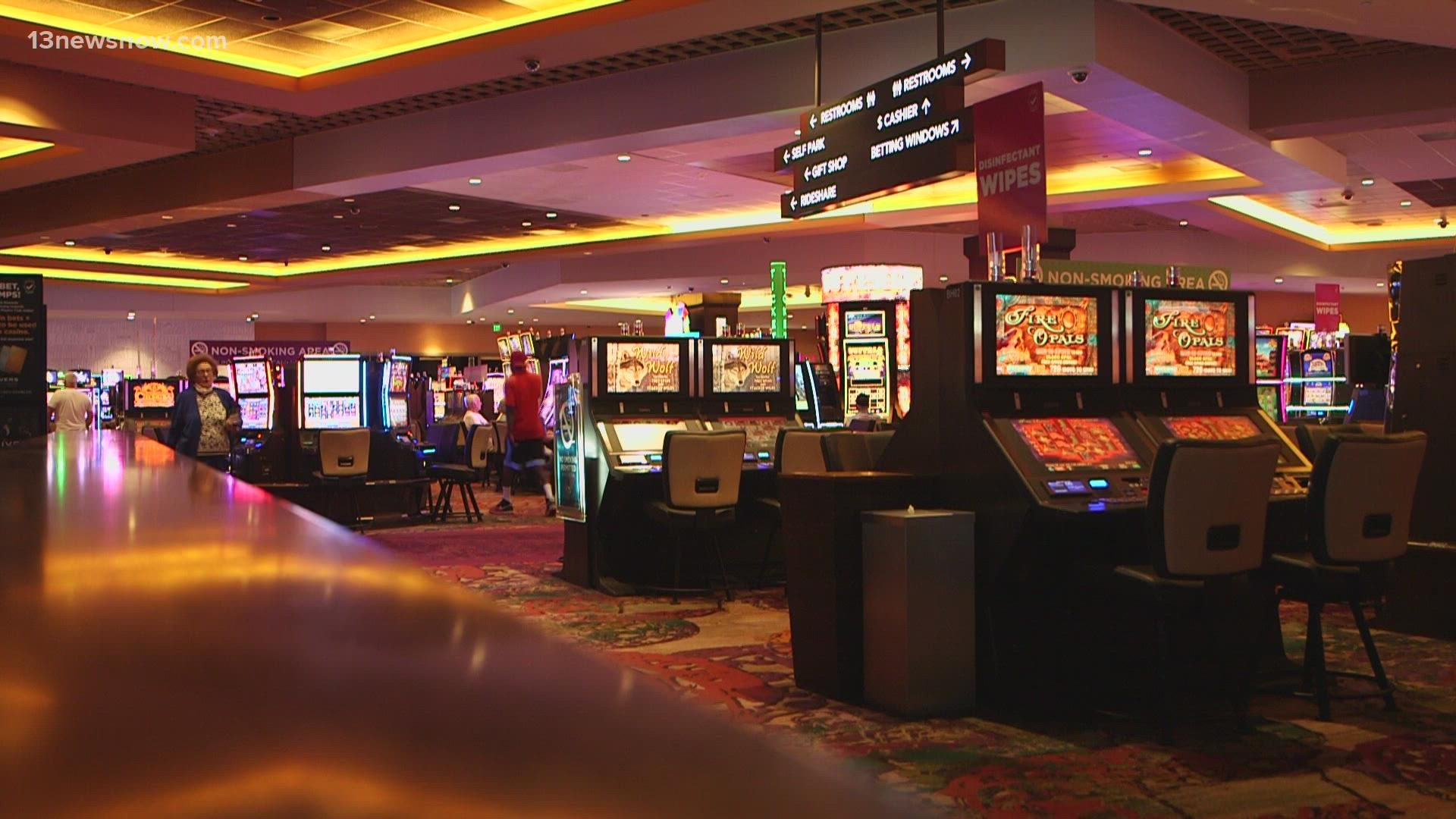
The first is to ensure that operators benefit from commercial flexibility to increase GGY through the ability to make more Category B machines available and/or reduce their energy costs through the removal of underused Category C and D gaming machines. Under Option 1, we received responses from industry which suggested that only slight increases in Category B gaming machines would be made. However, some licensing authorities posited that rather than removing lower staking machines, gambling operators should be deploying novel solutions to saving energy, such as incorporating standby and sleep functions on machines which are not in use.
The majority of respondents agreed that premises should adopt voluntary test purchasing as a way to monitor under-18s activity on ‘cash-out’ Category D slot-style machines. In relation to measures that venues should adopt to ensure no under-18s play on these types of machines, responses included additional staff checks on customers, staff training and placing machines in visible areas near cash desks or prize bars. Category C machines, which have a maximum stake of £1 and a maximum prize of £100, can only be played by adults in certain venues, such as pubs, betting shops, arcades and bingo halls.
We will work with the industry to create an ombudsman to adjudicate complaints and order redress when things go wrong. This white paper outlines a comprehensive package of new measures to achieve these objectives across all facets of gambling regulation, building on our work over recent years. What we will not permit is for operators to place commercial objectives ahead of customer wellbeing so that vulnerable people are exploited. Prevention of harm will always be better than a cure, so we are determined to strengthen consumer protections and prevent exploitative practices. We must also pay particular attention to making sure children are protected, including as they become young adults and for the first time are able to gamble on a wide range of products.
The legal age for lottery is different than other gambling forms. No one under the age of 18 is allowed entry into a brick-and-mortar casino. Casinos – There are multiple brick-and-mortar casino establishments in the United Kingdom offering varied games like baccarat, blackjack, poker and more. While bingo is considered more of a game of leisure and chance, it is still popular amongst online gamblers.
Online operators use data to identify and restrict accounts in response to suspected fraudulent activity and for commercial reasons (for example customers betting too successfully). Once a suitably effective and secure platform is in place, the Gambling Commission will consult on making data sharing on high risk customers mandatory for all remote operators. While the Commission licences operators and individuals, local authorities (and licensing boards in Scotland) licence premises and have the power to place conditions on licences as well as to grant or refuse them. It was subsequently amended in 2014 to extend to operators based anywhere in the world who are offering remote gambling to customers based in Great Britain.
So in common with the previous legislation, there has been a recognition that consent will not always be the appropriate basis for data processing. Consent is one way to comply with GDPR, but the new law provides five other ways of processing data that may be more appropriate than consent. The rules around consent only apply if a business is relying on consent as its basis to process personal data. One example of this is the myth that “data can only be processed if an organisation has explicit consent to do so”.
- Electronic terminals do not count as gaming machines and like live multi-player tables do not have stake and prize limits, other than operators’ own house limits.
- The SI has the effect of adding a new condition to all remote casino operating licences.
- Most of my career was spent in teaching including at one of the UK’s top private schools.
- Allowing direct use of debit cards on gaming machines – made negative statutory instrument.
- This change will be made in respect of licensing authorities in England and Wales.
The Behavioural Insights Team’s response to the consultation recommended that voluntary limits that are strongly encouraged are used over mandatory limits as the evidence of the impact of the latter is limited. The cooling-off period was also longer than industry submissions, with several respondents stating it should be 60 seconds or more. Respondents from the pub sector were in favour of voluntary limits over the mandatory limits but stated that if they were imposed, they should be consistent across the industry. The government’s preference is for a 30 second minimum cooling-off period, but we would be content with a longer minimum time period if evidence provided in response to the Gambling Commission’s consultation suggests that longer is needed in order to protect players.
The vast majority of responses came from industry representatives and local authorities, however, we also received a small number of responses from academics and individuals with lived experience of gambling-related harm. The evidence generated was diverse and was indicative of the varied positions of stakeholders, primarily arcade and bingo operators and licensing authorities. In making this recommendation we recognise the potential advantages that 1968 Act casinos may have over Small 2005 Act casinos that elect to move to the new regime, in terms of Schedule 9 payments and the portability of licences. This will help ensure that operators are operating within the regulations and enable licensing authorities to undertake appropriate licence checks.
In the event that one or more unused licences will be reallocated, we will consult on a process for local authorities to express interest in developing a casino in their area, including on the criteria against which expressions of interest should be evaluated. Both of these options would require a process to be put in place to enable a licensing authority to apply for the right to issue a casino licence in its licensing area. 1968 Act licences can move premises within a licensing authority (with agreement from the licensing authority), whereas 2005 Act licences cannot once they have been allocated to specific locations. It is not possible to create any new 1968 Act licences as these were superseded by the 2005 Act system, which preserved 1968 Act casinos on an open-ended basis.